Posted on: 15 October 2026
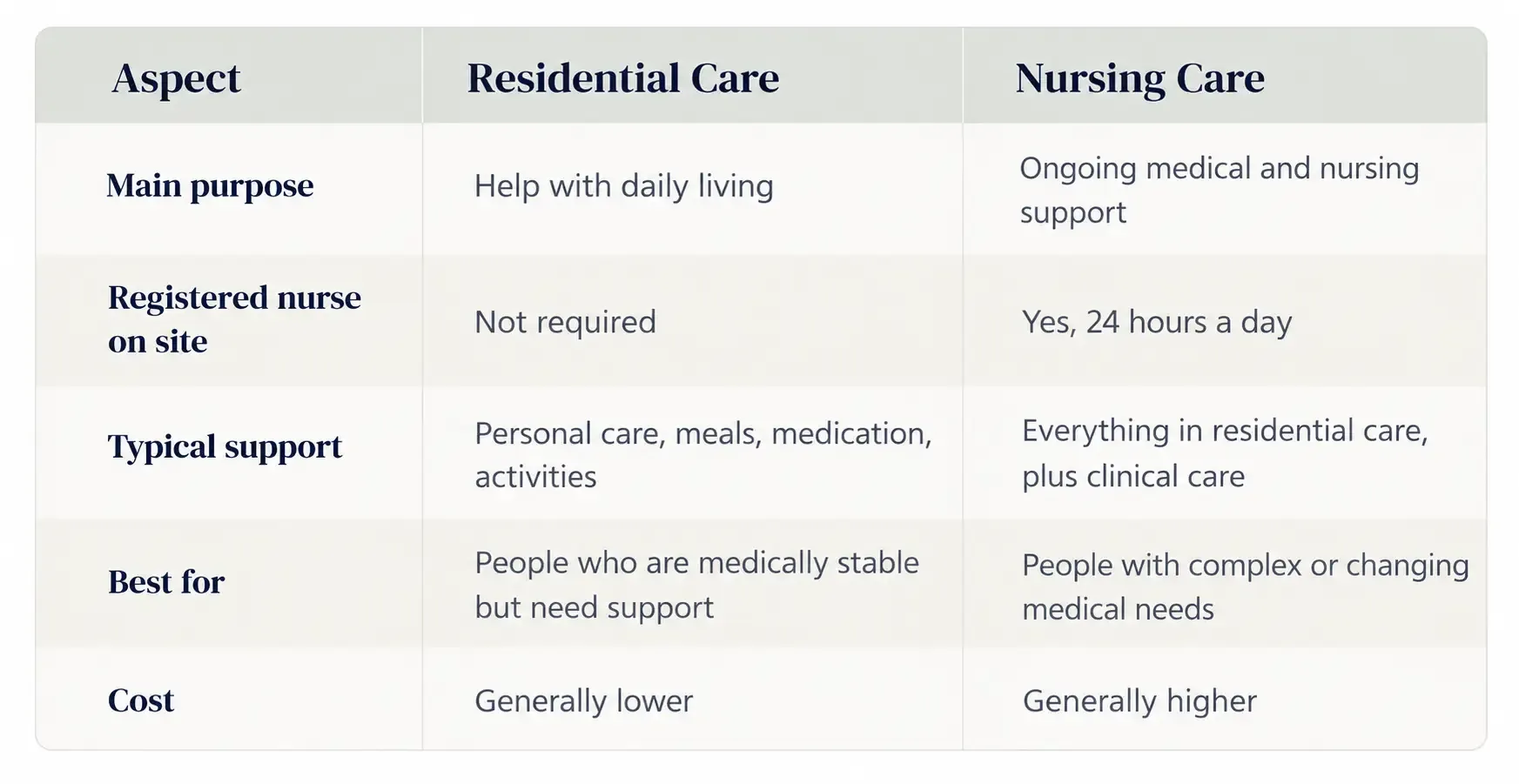
The main difference is that residential care provides help with daily living, such as washing, dressing, meals and medication, while nursing care adds registered nurses on site to manage ongoing medical conditions.
Residential care suits people who need support but are medically stable, and nursing care suits those who need regular clinical attention. At Ballagh Care, our Clacton-on-Sea homes focus on residential care, and we will always tell you honestly if your loved one needs something different.
Not Sure Which Type of Care Is Right? Ask Us
It is not always obvious from the outside. Our team can help you understand which kind of support is likely to fit, even if that means pointing you elsewhere.
The Two Types of Care Side by Side
Residential Care: Everyday Support in a Home Setting
Residential care is for people who can no longer live safely alone but do not need constant nursing. Carers help with washing, dressing, meals, medication, getting around safely and staying socially active.
The focus is on comfort, dignity and independence. Our guide on what residential care is covers this in more detail.
Nursing Care: Clinical Support Around the Clock
Nursing care includes everything above, with qualified nurses on site at all times. Nurses can carry out clinical tasks such as wound care and dressings, injections and complex medication, and catheter or feeding tube care. They also monitor conditions that need regular attention and support people recovering from serious illness or surgery.
When Nursing Care Is Needed
It is usually recommended when someone has a medical condition needing regular nurse attention, has left hospital with ongoing clinical needs, or has complex health that changes quickly. A GP, hospital team or social worker can arrange an assessment to confirm the right level of care.
Key takeaway: If your relative needs help with daily life but is medically stable, residential care is usually the right fit. If they need regular clinical treatment, nursing care is likely to be safer.
Dementia Care: Where Does It Fit?
Dementia care is about how support is delivered, in a calm, familiar setting with staff trained to understand memory loss. Some people with dementia need only residential-level support, while others also have nursing needs. Read more about dementia care at Ballagh Care.
What If Care Needs Change?
Needs can change over time, so it is worth asking any home how residents' needs are reviewed, what happens if health needs increase and whether the team will help arrange a move to a nursing home if needed. A good provider will answer openly and put the resident's wellbeing first.
Comparing the Costs
Nursing care usually costs more because of the additional clinical staffing. In England, some people in nursing homes may receive an NHS-funded contribution towards their costs, and a small number qualify for NHS Continuing Healthcare. Your local council or NHS team can advise on eligibility, so it is worth asking early.
Come and See for Yourself: Tour a Home
Seeing a home in person is the best way to judge whether it can meet your loved one's needs. Bring your questions on staffing, care levels and what happens if needs change.
How to Choose Between the Two
Start by asking whether your relative needs regular medical treatment from a nurse, and whether their health is stable or changing quickly. Ask what their GP or hospital team has advised, and think about how their needs might develop over the next year or two.
If you are not ready for a permanent move, a short respite stay lets your relative try a home for a few days or weeks. You can meet Winsford House, Gairloch House and The Cavendish on our Our Homes page, or read our overview of residential care homes in Essex.
Your Questions, Answered
What is the main difference between a care home and a nursing home?
A care home provides personal support with daily living. A nursing home also has registered nurses on site for medical needs.
Is nursing care more expensive than residential care?
Usually, yes, because it involves qualified nursing staff around the clock. Some people may receive NHS funding towards nursing costs, so it is worth checking eligibility.
Can someone move from residential care to nursing care later?
Yes. If health needs increase, a review can lead to a move to a nursing home. A good care provider will support you through it.
Does dementia mean someone needs nursing care?
Not necessarily. Many people with dementia are well supported in residential or dedicated dementia care, unless they also have significant medical needs.
Who decides which type of care is needed?
A GP, hospital team or social worker can assess needs and advise. Care providers can also give an informed view during an initial conversation.
Let's Find the Right Next Step Together
Call us on 01255 435408 or send an enquiry, and we will listen, answer honestly and help you plan.
Ready to visit Ballagh Care home?