
Posted on: 15 October 2026
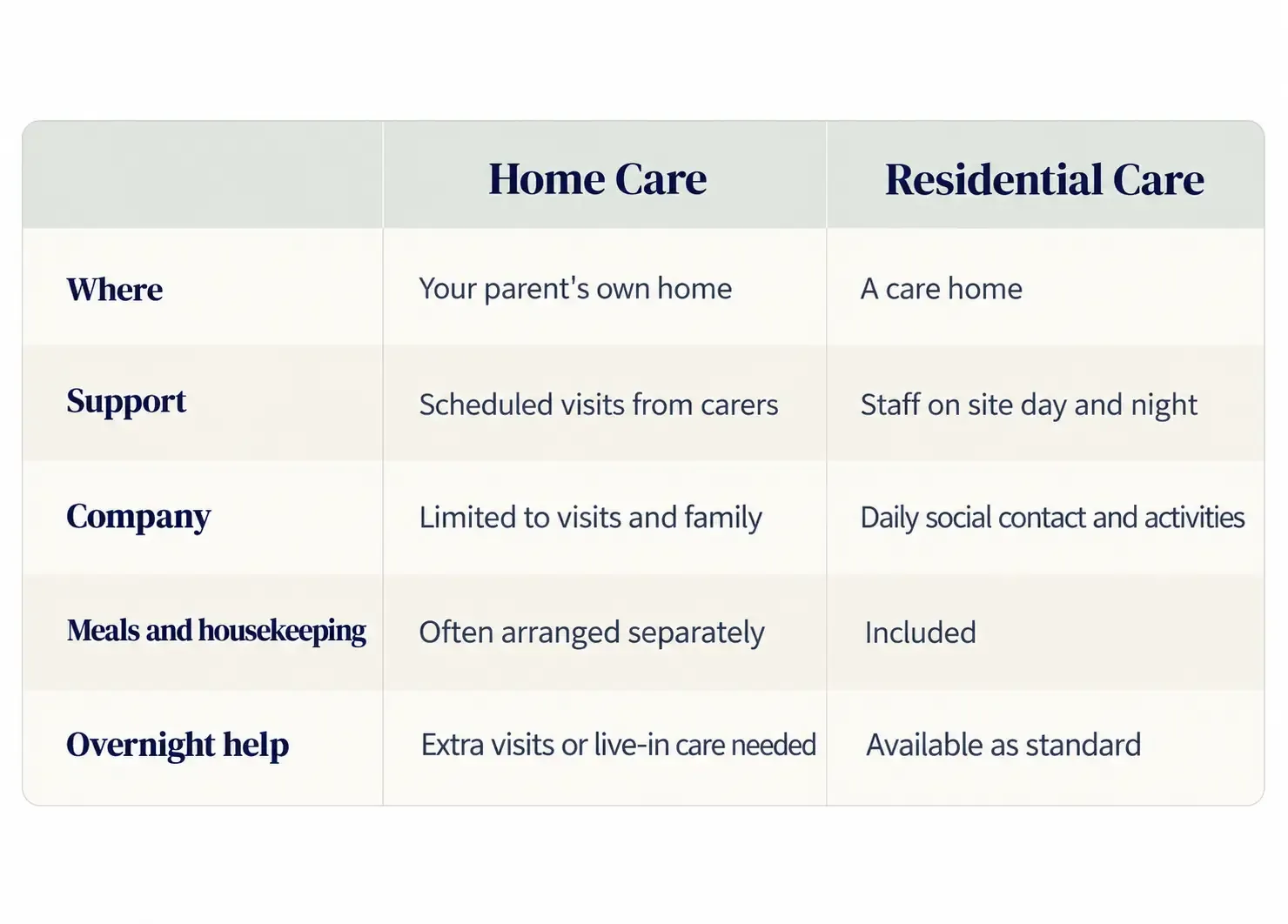
Home care brings carers to your parent's own house for set visits, while residential care means moving into a care home with staff available around the clock. Home care suits people who are mostly independent and have family nearby.
Residential care suits those who need frequent help, company or night-time support. At Ballagh Care, a family-run provider in Clacton-on-Sea, we help families weigh both honestly through our residential care service.
A Big Decision Deserves an Honest Conversation
The best choice depends on your parent's health, home and wishes. We will give you an honest view, even if that view is that home care still works for now.
Home Care and Residential Care at a Glance
The Case for Staying at Home
Home care, also called domiciliary care, means carers visit to help with washing, dressing, meals and medication. Its strengths are real. Your parent stays among their own belongings and neighbourhood, care can start small and grow as needs increase, and it works well when help is modest and family live close by.
For many people in the early stages, this is the right choice, and it is worth honouring that wish for as long as it is safe.
When Home Care Starts to Fall Short
Gaps between visits can leave a person alone for long stretches, and that is often when problems happen. It may be time to rethink if help is needed several times a day, including at night, or if falls and near misses are becoming more common.
Loneliness between visits, missed meals, medication or hygiene, and a family member close to burnout are further signs that the current arrangement is no longer enough.
The Case for Residential Care
In residential care, your parent has their own room, shared spaces and trained staff at all times. Our guide to what residential care is explains more. Help is within minutes, shared meals and activities reduce isolation, and food, medication and personal care happen on schedule.
Families often find peace of mind too, and can return to being a son or daughter rather than only a carer.
Key takeaway: Home care protects familiarity, and residential care adds safety, company and round-the-clock support. The right choice follows your parent's needs, not a rule.
Comparing the Costs
It is hard to say that one is simply cheaper. Home care is usually charged by the hour, so a few short visits can cost less than a care home place. But as hours increase, overnight or live-in support can make the total grow quickly. Residential care is usually one weekly fee covering care, meals, housekeeping, laundry and utilities.
When comparing, include household bills, meals and home maintenance. Our guide on residential care costs in Essex explains what affects fees.
You Don't Have to Choose All or Nothing
There are middle options. Day care offers daytime company and meals, with your parent returning home in the evening. Respite care is a short stay that gives a family carer a break. Some families use home care alongside day care for a time before deciding on a move.
Not Sure Yet? Try a Short Stay First
If your parent is nervous, respite care lets them experience a care home for a few days or weeks, with no long-term commitment.
How to Talk to Your Parent About the Move
This is their life, so their voice matters most. Start the conversation early, before a crisis forces a decision, and listen to their fears, as many people worry about losing independence or being a burden. Visiting a home together makes the idea less abstract, and focusing on what they would gain, such as safety, company and good food, helps.
Gently reassure them that moving into a home is not giving up. It can be a way to keep living well. Once they move in, bring familiar furniture and photos, and share their life story with staff.
Finding a Home That Feels Right
Look at the atmosphere, inspection reports, staffing and food, and visit before you decide. We are a family business spanning two generations, and you can read more about us on our About Us page. Meet Winsford House, Gairloch House and The Cavendish on our Our Homes page, or read our guide to residential care homes in Essex.
Your Questions, Answered
Is a care home better than home care?
Neither is better for everyone. Home care suits people with lighter needs, while a care home suits those who need frequent help, company or night-time support.
When should I move my parent from home care to a care home?
Consider it when visits no longer cover their needs, falls or missed meals are increasing, loneliness is growing or family carers are struggling.
Is residential care more expensive than home care?
It depends on the hours of support needed. A few visits a week can cost less, but extensive or overnight care at home can cost more than a care home place.
What if my parent refuses to move?
Listen to their worries, involve them in visits and consider a short respite stay. If they have capacity, the decision is ultimately theirs.
Can my parent try a care home first?
Yes. A respite stay lets them experience a home before deciding on a permanent move.
Take the Next Step at Your Own Pace
You do not need the answer today. Call us on 01255 435408 or send an enquiry, and we will help you plan at a pace that suits your family.
Ready to visit Ballagh Care home?